

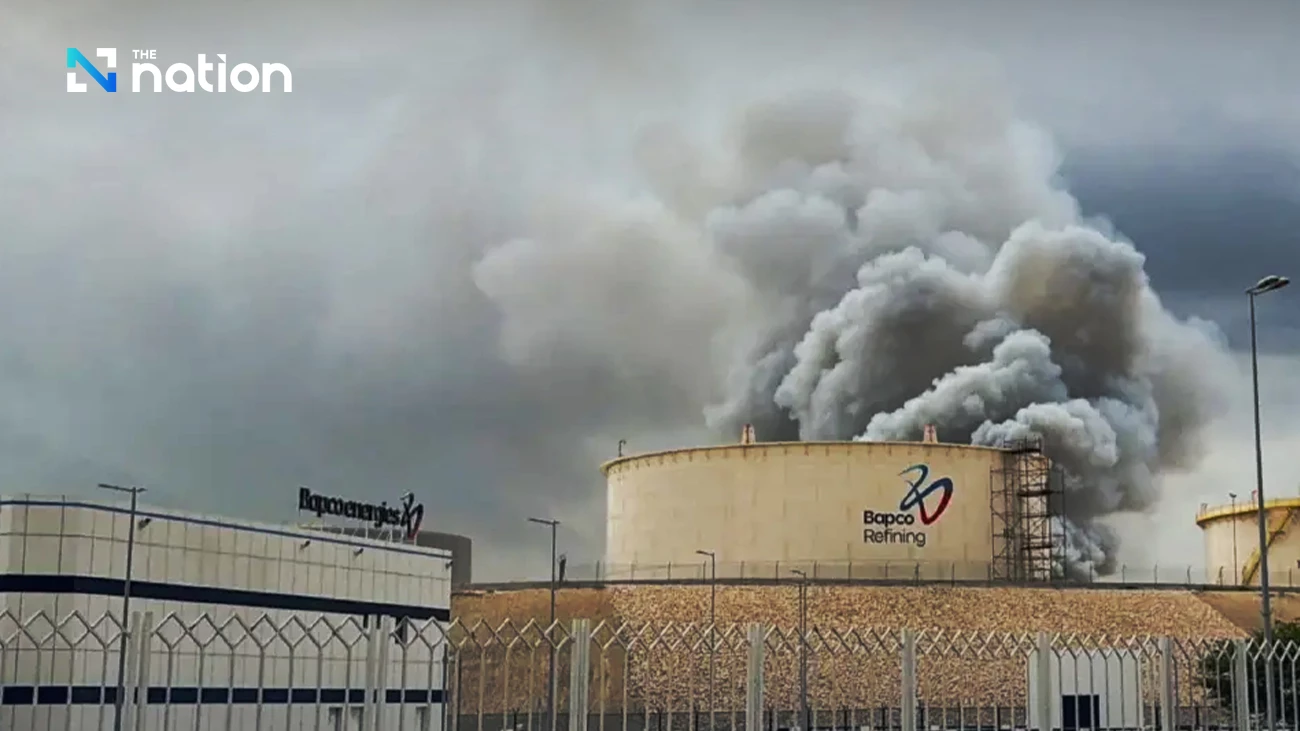
A massive fire broke out at Bahrain’s Bapco oil refinery on April 5, 2026, after it was struck by Iranian missiles and explosive drones, marking one of the most alarming escalations in the ongoing Middle East conflict. The incident has intensified global fears over energy security, oil supply disruptions, and a widening regional war.
According to live updates and breaking news multiple reports, the strike is part of a broader wave of Iranian attacks targeting critical infrastructure across the Gulf region, including the UAE and Kuwait.
Breaking News (April 5, 2026): What Happened?
On Sunday, April 5, 2026, Bahrain confirmed that its main oil refinery—operated by Bapco Energies—was hit during an Iranian missile and drone attack.
- A large fire erupted immediately after impact
- Thick smoke was seen rising over the refinery
- Emergency teams were deployed rapidly
- The blaze was successfully extinguished
Officials stated that the fire was contained by public safety teams, preventing further escalation.
Live reports indicate that the हमला involved both missiles and UAV (drone) strikes, highlighting the scale and coordination of the attack.
📍 Where Did the Attack Take Place?
The strike targeted the Bapco refinery in Sitra, Bahrain’s primary oil processing hub.


Why This Location Matters
- Bahrain’s largest and only refinery
- Key supplier of fuel to regional and global markets
- Strategically located near the Strait of Hormuz
Any disruption here has global implications, especially for oil prices and supply chains.
Timeline of the April 5 Attack
Early Morning Warning
Authorities in Bahrain and the UAE issued alerts about incoming missiles and drones, urging residents to seek shelter.
Strike and Explosion
Missiles and drones struck the refinery, triggering:
- Loud explosions
- Fire inside refinery units
- Panic in surrounding industrial zones
Emergency Response
- Firefighters contained the blaze
- Civil defense secured the area
- Air defense systems continued intercepting threats
Part of a Wider Middle East War
The refinery attack is not an isolated incident—it is part of the ongoing 2026 Iran war, involving multiple countries and escalating rapidly.
Recent developments include:
- Iranian strikes on Gulf infrastructure
- U.S. and Israeli attacks on Iranian targets
- Drone attacks on Kuwait and UAE
- Threats to the Strait of Hormuz
The situation has turned into a multi-front regional conflict, affecting both military and civilian infrastructure.
Previous Attacks on Bahrain’s Energy Infrastructure
The April 5 strike follows weeks of repeated attacks on Bahrain.
Earlier Incidents:
- March 5, 2026: Missile strike caused refinery fire (contained)
- March 9, 2026: Explosion injured dozens near refinery
- Mid-March: Fuel depots and industrial facilities targeted
- Late March: Continued drone and missile interceptions
Since late February, Bahrain has faced:
- Hundreds of missiles and drones
- Civilian casualties and infrastructure damage
- Attacks on ports, oil facilities, and residential areas
Impact on Global Oil Markets
Immediate Effects
- Oil prices show volatile spikes
- Markets react to supply disruption fears
- Investors shift toward safe assets
The Gulf region accounts for a significant share of global oil exports, making any instability highly impactful.
Why Oil Refineries Are Prime Targets
Energy infrastructure like the Bapco refinery is often targeted because:
1. Economic Pressure
Disrupting oil production affects global markets and national revenues.
2. Strategic Importance
Refineries are critical nodes in energy supply chains.
3. Psychological Impact
Such attacks create fear and signal military capability.
Environmental and Safety Concerns
Oil refinery fires can cause:
- Toxic air pollution
- Risk of chemical leaks
- Potential long-term environmental damage
Fortunately, Bahrain’s quick response limited the spread of fire, reducing environmental risks.
Human Impact: Were There Casualties?
As of the latest updates:
- No confirmed fatalities reported
- Emergency protocols helped protect workers
- Authorities acted swiftly to secure the site
However, previous attacks in Bahrain have resulted in injuries and deaths, highlighting the ongoing danger.
Government Response
Bahrain’s government reassured the public:
- The fire is under control
- Oil supply remains stable
- Security forces are on high alert
Increased Measures
- Air defense systems activated
- Surveillance of critical sites increased
- Coordination with allies strengthened
International Reaction
United States & Allies
Bahrain hosts the U.S. Navy Fifth Fleet, making it strategically crucial.
- The U.S. is closely monitoring the situation
- Military readiness in the Gulf has increased
Global Energy Stakeholders
Countries worldwide are watching closely, especially:
- Europe
- China
- India
- Japan
Any prolonged disruption could impact global fuel prices and economic stability.
Strait of Hormuz: A Critical Flashpoint
The attack raises concerns about the Strait of Hormuz, one of the world’s most important النفط chokepoints.
- Handles ~20% of global oil trade
- Any closure or disruption would shock global markets
Recent reports suggest growing risks to shipping routes due to escalating conflict.
Expert Analysis: What This Means Going Forward
The April 5 attack signals:
1. Escalation of Warfare
Iran’s ability to strike key infrastructure shows increasing military reach.
2. Rising Energy Risks
Oil supply chains are becoming more vulnerable.
3. Potential Global Economic Impact
Continued attacks could lead to:
- Fuel shortages
- Price surges
- Economic instability
Will There Be More Attacks?
Experts warn that:
- Further missile and drone strikes are likely
- Gulf infrastructure remains a key target
- The conflict could expand to more countries
Conclusion
The April 5, 2026 missile attack on Bahrain’s Bapco refinery is a defining moment in the escalating Middle East conflict. While the fire has been contained, the broader implications are profound.
This incident highlights:
- The vulnerability of global energy infrastructure
- The growing intensity of regional warfare
- The real risk of a wider economic and geopolitical crisis
As tensions continue to rise, the world is watching closely—because what happens in Bahrain today could shape global energy security tomorrow.